Online Nursing Programs Near Me At Chamberlain University

Online Nursing Programs Near Me At Chamberlain University

Nursing is a growing career, and healthcare needs skilled nurses more than ever. Today’s nurses do more than basic patient care—they play an important role in treatment, decision-making, and supporting patients and families. Choosing the right nursing program can help you build a strong and secure future in healthcare.

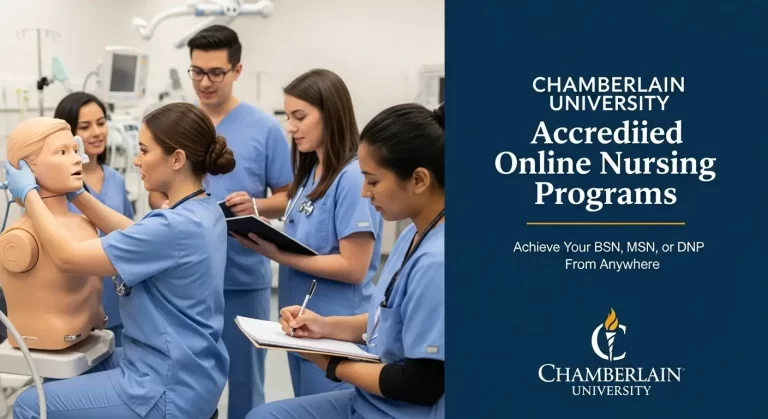
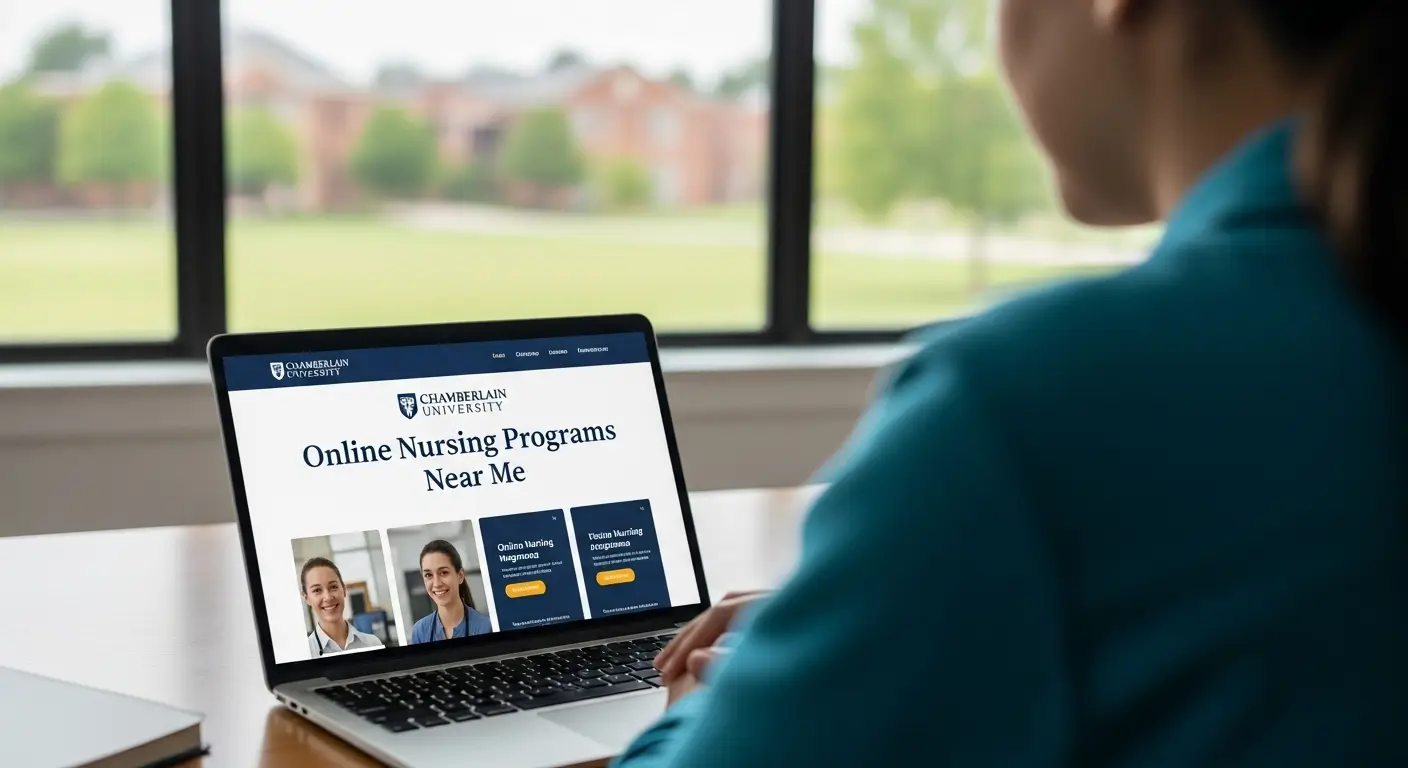
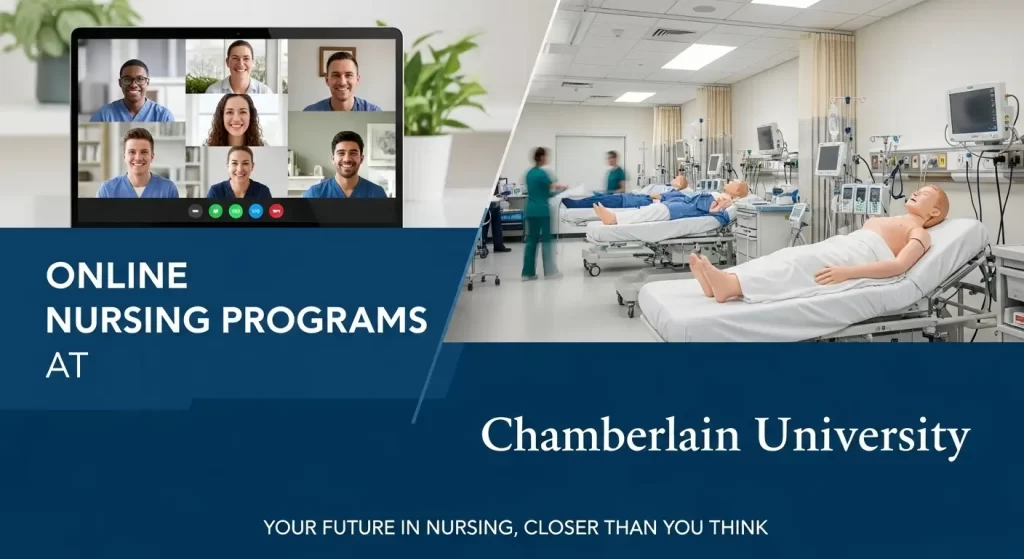
Chamberlain University offers online nursing programs for students searching for online nursing programs near me who want flexibility and quality education. Whether you are starting your nursing journey or looking to move forward in your career, Chamberlain provides online classes, experienced instructors, and practical training. This allows students to study from home while managing work and personal life without lowering education standards.

What Are Online Nursing Programs?

Online Nursing Programs are learning programs that let students study nursing through online classes rather than attending a campus every day. They are ideal for people who want to start a nursing career or move ahead in the field while balancing work, family, or other daily responsibilities.

In these programs, most lessons—such as theory, lectures, and assignments—are completed online. Practical training is still required, but it is usually done at approved hospitals or healthcare centers close to the student’s location. This way, students can gain real clinical experience while enjoying the convenience of online learning. Online nursing programs are offered at different levels, including undergraduate and advanced degrees, and are known for their flexibility and career-focused approach.

Online Nursing Programs Near Me At Chamberlain University

Find the Online Nursing Program That Fits You Best

Choose an online nursing program based on your goals and education level. Whether you are starting in nursing or looking to advance your career, there are multiple options available to match your needs.

Program Options Include:

  • Adult-Gerontology Acute Care Nurse Practitioner Certificate
  • Adult-Gerontology Primary Care Nurse Practitioner Certificate
  • Associate Degree in Nursing
  • RN to BSN (Bachelor of Science in Nursing)
  • Doctor of Nursing Practice (DNP)
  • ExcelTrack® Master of Science in Nursing
  • Executive Leadership Graduate Certificate
  • Family Nurse Practitioner – Primary Care Certificate
  • Master of Science in Nursing (MSN)
  • MSN and MBA Dual Degree Program

What Are the Admission Requirements for Nursing Programs?

To enroll in a nursing program, students must meet some basic education requirements and submit an application. The requirements depend on the type of program you choose.

For Undergraduate Nursing Programs

Applicants must have a high school diploma or a GED to apply for associate or bachelor’s degree programs.

For Graduate Nursing Programs and Certificate Courses

Applicants need a bachelor’s degree from an accredited college or university to qualify for master’s programs or nursing certificates.

What Will You Learn in a Nursing Program?

In a nursing program, you will learn topics such as patient care, medical terminology, anatomy, medications, and nursing procedures. You will also practice communication, teamwork, and critical thinking, which are essential for working in healthcare. Most programs also include clinical training, where you work directly with patients under supervision in a real healthcare environment.

Who Can Join a Nursing Program?

Different nursing programs have different entry requirements. For entry-level programs, students usually need a high school diploma or GED. For advanced programs like MSN or DNP, students must already have a bachelor’s degree and a nursing license. Nursing programs are available for beginners as well as for working nurses who want to advance their careers.

What Are the Types of Nursing Programs?

Nursing programs are offered at different levels depending on your goals:

  • Associate Degree in Nursing (ADN) – basic nursing program to become an RN
  • Bachelor of Science in Nursing (BSN) – more advanced degree with better career opportunities
  • RN-to-BSN – for nurses who already have an RN and want to upgrade to a BSN
  • Master of Science in Nursing (MSN) – for specialized nursing roles and leadership
  • Doctor of Nursing Practice (DNP) – highest level for advanced nursing practice and leadership

Why Choose an Online Nursing Program?

Online nursing programs allow students to study from home and manage their time better. They are especially helpful for working nurses or busy students. The theory and lectures are done online, while clinical training is completed at approved local healthcare facilities. This makes it easier to earn a degree without leaving your job or moving to a campus.

Nursing Programs

Associate in Applied Science (AAS) in Nursing

  • Two-year program preparing students for the NCLEX-RN exam
  • Leads to a career as a Registered Nurse (RN)
  • Strong clinical training with local hospitals and healthcare agencies
  • Focus on patient care, safety, communication, and healthcare technology
  • Covers physical and emotional patient needs
  • Accredited by the Accreditation Commission for Education in Nursing (ACEN)

Nursing Dual Degree (AAS & BSN)

  • Earn both AAS and BSN degrees in four years or less
  • Summer sessions available to speed up completion
  • BSN prepares nurses for leadership and management roles
  • First three years taught in on-campus classrooms
  • Final year completed fully online
  • Affordable tuition and fees
  • ACEN accredited program

Online RN-to-BSN Program

  • 100% online program designed for working nurses
  • Flexible schedule with two 7-week sessions per semester
  • Option to study full-time or part-time
  • Clinical practicum completed in the student’s local area
  • Easy-to-use online learning system
  • 24/7 access to technical support and tutoring
  • Affordable tuition
  • Accredited by ACEN

Online Master’s in Nursing Administration (MS)

  • Prepares graduates for roles such as nurse manager or healthcare director
  • Focus on leadership and administrative skills
  • No GRE required for admission
  • Flexible 7-week course sessions
  • Full-time or part-time study options available
  • Online classes with 24/7 technical support and tutoring
  • Affordable tuition
  • Accredited by the Commission on Collegiate Nursing Education (CCNE)

Online Master’s in Nursing Education (MS)
  • Prepares nurses for teaching and educator roles
  • Suitable for nursing schools, staff training, and community education
  • No GRE required
  • Courses offered in flexible 7-week sessions
  • Fully online format with easy access to learning tools
  • 24/7 technical assistance and tutoring
  • Affordable tuition
  • CCNE accredited program
Online Nursing Degree PRogram

🩺 Tips for Choosing the Best Online Nursing Programs

1. Check Accreditation First

  • Ensure the program is accredited by recognized nursing bodies like ACEN or CCNE
  • Accreditation affects licensing, transfer credits, and employment opportunities

2. Match the Program to Your Career Goal

  • Choose an RN-to-BSN if you’re already licensed and want a bachelor’s degree
  • Select MSN (Administration or Education) if you want leadership or teaching roles
  • Dual-degree (AAS + BSN) is ideal if you want both a diploma and a bachelor’s

3. Review Clinical Requirements

  • Even online programs may require practicum or clinical hours
  • Ask how the school helps you arrange clinical placements in your area

4. Flexibility and Schedule

  • Look for programs with short terms (e.g., 7-week sessions)
  • Confirm if they allow part-time options for working nurses

5. Technology & Support Services

  • Good online programs offer:
  • 24/7 technical support
  • Online tutoring
  • Easy online learning platforms
  • These make coursework more manageable

6. Cost and Financial Aid

  • Compare tuition and overall fees between programs
  • Check if scholarships, payment plans, or financial aid are available

7. Admission Requirements

  • Some online nursing programs don’t require GRE scores
  • Check prerequisites and how easy or difficult admission is for working professionals

8. Faculty Experience

  • Look for instructors with real clinical and online teaching expertise
  • Experienced faculty can improve learning and support

9. Reputation and Outcomes

  • Research program reputation, graduation rates, and job placement success
  • Alumni reviews can be useful

10. State Authorization

  • If you’re studying online from a different state/country, confirm:
  • The program is authorized to enroll students where you live

FAQs

Yes. Online nursing certifications are legitimate if they are offered by recognized and accredited organizations. Some certifications may still require in-person clinical or exam components, so always check the program details before enrolling.

Yes. Online RN programs are designed for working students. They offer flexible schedules, part-time options, and fully online classes, allowing you to work while studying. Some employers may also help with tuition costs.

Licensed Practical Nurses (LPNs) or Licensed Vocational Nurses (LVNs) are generally the easiest and fastest nursing roles to enter. These programs usually take 12 to 16 months to complete, making them a quick path into the nursing field.

LPNs/LVNs have more limited responsibilities and authority compared to registered nurses, but they play an important role in patient care and gain hands-on healthcare experience quickly.

Yes. Nursing offers a good return on investment. Registered nurses earn a median salary higher than the national average, and those with advanced degrees, like APRNs, can earn significantly more. Nursing provides both stable income and career growth opportunities.

Not always. You can become a Registered Nurse (RN) in about 2 years with an associate degree. However, many employers prefer a BSN (Bachelor of Science in Nursing), which usually takes 4 years to complete.

Conclusion

Choosing the right nursing program is a crucial step toward a rewarding and stable career in healthcare. Online nursing programs, like those offered by Chamberlain University, provide the flexibility to balance work, life, and education while still delivering high-quality training and clinical experience. From entry-level associate degrees to advanced master’s and doctoral programs, students have multiple pathways to grow professionally and achieve their career goals.

By selecting an accredited program, understanding admission requirements, and utilizing available online tools and support services, students can make the most of their education. Ultimately, pursuing a nursing program equips you with the skills, knowledge, and credentials needed to thrive in a growing and essential field, all while maintaining the convenience and adaptability of online learning.
Similar Posts

Leave a Reply

Your email address will not be published. Required fields are marked *