
Federal Student Aid starts (FAFSA) Applying for Federal Student Aid Affordable Education
Applying for Federal Student Aid starts with the FAFSA, a simple form that helps determine your eligibility for important financial support like Pell Grants and Federal Direct Subsidized Loans. By completing it early, you can unlock federal and state aid that makes college more affordable and your education journey easier to plan.
Want to Get any other Type of Financial Aid?
Your Guide to Applying for Financial Aid the Right Way
Filling out your FAFSA? Chamberlain’s school code is 006385. The first step in applying for federal student aid is to complete the Free Application for Federal Student Aid (FAFSA®). This single FAFSA form is used to apply for all federal and most state financial aid programs, including need-based assistance like Pell Grants and Federal Direct Subsidized Loans. Your FAFSA details help determine how much aid you may qualify for.
To improve your chances of receiving the maximum available financial aid, it’s best to submit your FAFSA within two weeks of applying for admission. The form must also be renewed every year to keep your eligibility active. For official federal and state FAFSA deadlines, visit the Federal Student Aid website.
After the U.S. Department of Education processes your FAFSA and sends the information to Chamberlain University, you’ll receive a customized financial aid award letter showing the types and amounts of aid you may be eligible for. This makes it easier to plan your education costs with confidence.
How do I apply for FAFSA Financial aid?
Step 1: Create or Verify Your FSA ID
Start by making sure you and any required contributors have an FSA ID to complete the FAFSA online. Even contributors without a Social Security Number can create one. If an FSA ID already exists, you can use the same account—no need to register again.
Step 2: Submit Your FAFSA as Early as Possible
File your FAFSA form online to speed up processing and improve your chances of qualifying for the maximum federal and state student aid, including grants and low-interest loans. Early submission is always recommended.
Step 3: Add Chamberlain University to Your FAFSA
Include Chamberlain University in the list of schools receiving your FAFSA information.
- Main school code: 006385
- Indianapolis campus: add E02182 as your first school code (along with 006385)
Keep in mind: Online students are not eligible for Indiana state grants.
Step 4: Resolve FAFSA Issues if Needed
If you run into errors or system issues, check the FAFSA Updates page for the latest guidance. For additional help, contact the U.S. Department of Education through their customer support page or call 1-800-848-0978.
Steps to Apply for Financial Aid
Step 1: Complete the Free Application for Federal Student Aid (FAFSA®)
Start your financial aid process by filling out the Free Application for Federal Student Aid, also known as the FAFSA®. This form is required to determine your eligibility for federal grants, state financial aid programs, and low-interest student loans.
Step 2: Submit All Required Financial Aid Documents
Your school may ask for supporting documents—such as tax returns, W-2 forms, or verification worksheets—to confirm your FAFSA information. Log in to your student financial aid portal to upload documents, check deadlines, and track your progress.
Step 3: Review and Accept Your Financial Aid Offer
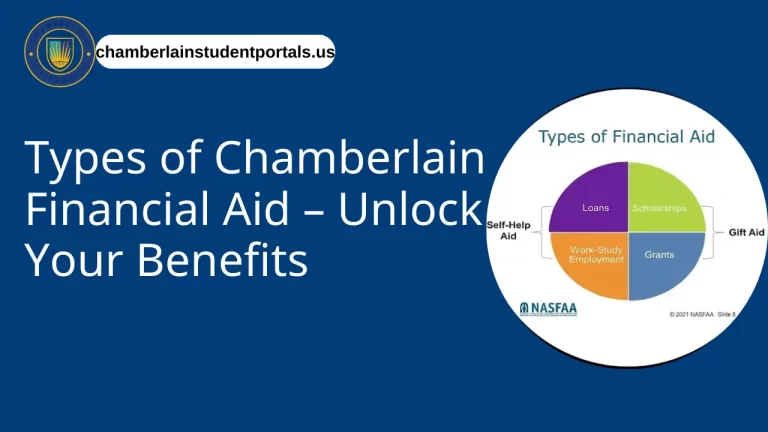
After you’re admitted, you’ll receive a financial aid award letter outlining the grants, scholarships, work-study, and federal student loan options available to you. Carefully compare each offer and accept or decline aid based on your educational and financial needs.
Quick Steps to FAFSA Resources
Step 1: Open the FAFSA application to start your federal student aid form.
Step 2: Create your FSA ID to sign in and submit your FAFSA.
Step 3: Review the How to Complete the FAFSA guide for quick help.
Step 4: Join a Financial Aid Bootcamp for step-by-step support.
Step 5: Use the Student Aid Estimator to see your potential aid.
FAFSA Release Dates & Eligibility Updates
Chamberlain follows all federal and state rules for fair credit and financial aid, but we cannot promise that every student will receive financial help. FAFSA® is a registered trademark of the U.S. Department of Education.
The 2025–26 FAFSA form is expected to be officially released on December 1, 2024. Some families may get early access starting October 1, 2024 as part of a testing period. This new release schedule helps students and families plan ahead for federal and state financial aid.
The 2024–25 FAFSA is still open for students who were enrolled at Chamberlain before the May 2025 session and are still attending. If you qualify, it’s best to fill out the 2024–25 FAFSA soon so you don’t miss out on possible grants, scholarships, or federal student loans. Students who return to Chamberlain after a break may also be considered for aid if they meet all federal rules.
Want to get a Loan?→ Chamberlain University Loan
11 Common FAFSA Mistakes That Can Hurt Your Financial Aid
Completing the FAFSA correctly is important if you want the best chance of getting federal grants, scholarships, and student loans. Here are the most common FAFSA mistakes that often delay—or even reduce—your financial aid.
1. Waiting too long to file your FAFSA
Filing late can cause you to miss out on limited grant and scholarship funds that are awarded on a first-come, first-served basis.
2. Not creating your FSA ID in advance
Students and contributors need their own StudentAid.gov FSA ID, and forgetting to set it up can slow down the whole application.
3. Entering incorrect personal information
Mistakes in your legal name, Social Security Number, birth date, or email can cause FAFSA processing delays.
4. Leaving answer boxes blank
Empty fields can trigger errors. Use “0” or “N/A” where required to avoid problems.
5. Listing the wrong parent information
Dependent students often report the wrong parent or stepparent. Use the FAFSA “Who’s My Parent?” tool to be sure.
6. Including assets that don’t belong on the FAFSA
You should not list retirement savings, home equity, or college savings accounts not in your name.
7. Using the wrong tax year
FAFSA uses prior-prior tax information, so using the wrong forms can lead to mismatched data.
8. Using an email you rarely check
Schools send important updates by email, so a rarely checked address can cause missed deadlines.
9. Miscounting household size
Students often forget to include themselves or siblings who are attending college half-time.
10. Forgetting signatures and consent
Your FAFSA won’t be processed unless every contributor signs and gives consent—even if they have no SSN or didn’t file taxes.
11. Skipping the FAFSA Submission Summary
Not reviewing your Student Aid Index, Pell Grant estimate, and reported answers can lead to avoidable errors and delays.
Read Why Chamberlain University Is a Top Choice?
Frequently Asked Questions
Conculsion
Applying for federal student aid through the FAFSA® is the first and most important step toward making college or career school more affordable. By completing the FAFSA accurately and early, students can access federal grants, work-study opportunities, scholarships, and low-interest loans. Understanding eligibility requirements, avoiding common FAFSA mistakes, and submitting all necessary documents ensures you maximize your financial aid potential. Even if you are an international student or returning after a break, exploring all available options—including state and school-based aid—can help you plan your education costs with confidence.
Properly navigating the FAFSA process empowers students and families to make informed financial decisions and unlocks resources that make higher education accessible and manageable. Start early, stay organized, and review your award letters carefully to secure the best possible aid for your academic journey.